
Research: Intertextuality
- Natalia Muñiz Blasco
- Dec 13, 2021
- 3 min read


Hi everyone!
For this part of my research, I will be having a look at intertextuality in music videos and how I might use it in mine to appeal to my target audience.
Hope you enjoy this post!
xx Natalia
What is Intertextuality and Why do we Use It?

Intertextuality is when a media text clearly references another media text through its plot details, mise-en-scène or other visual or narrative elements.
Purpose: it can act as an "easter egg" in films; it can be a direct form of appeal to an audience demographic: this can be the target audience, or an older audience, such as in Disney films, when intertextuality is used to appeal to the adult audience that will be watching the film with their children.
Intertextuality in Films/TV:
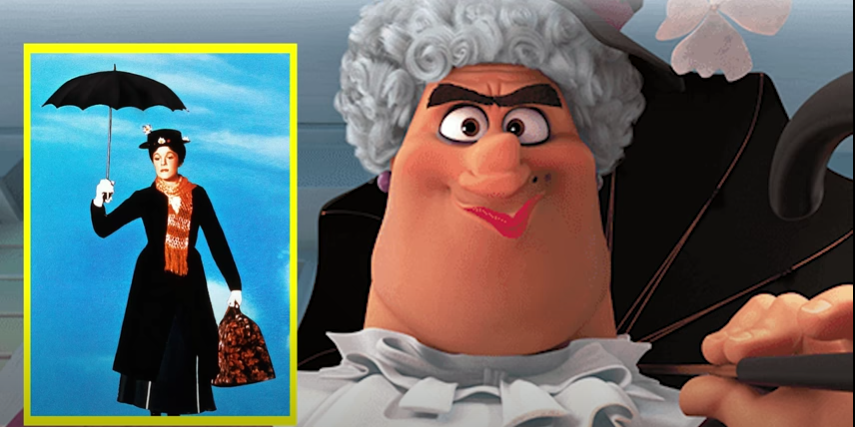
Many Disney films use intertextuality as an "easter egg" in their plots, or as a means of attracting an older audience. See here for examples in The Boss Baby (2017)
Mary Poppins and "Eugenia" (the babysitter)
Stunt Jumps and Evel Knievel

"Gandalf", Lord of the Rings and the alarm clock:

Some of these references (like Mary Poppins) will be identified by children, but others (like Evel Knievel) might be recognised only by adults. This successfully targets both demographics in what is meant to be a "family film".
Intertextuality in Music videos:

Music videos might use intertextuality to appeal to a certain target audience, to make a parody for comedic purposes (and attract perhaps a younger audience on YT) or to give homage to another iconic music video.
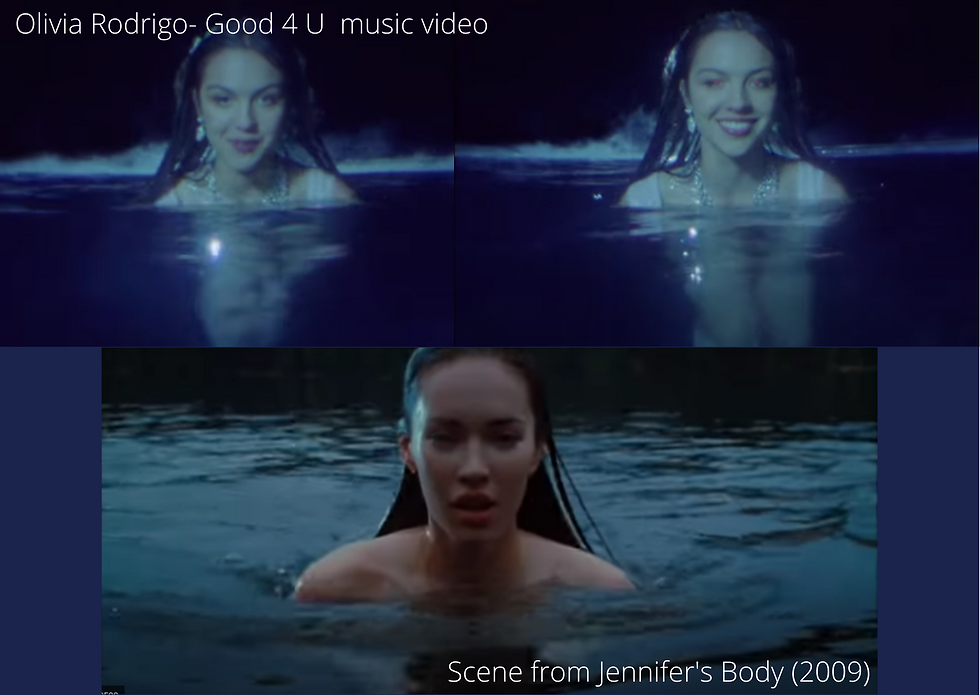
Good 4 U- Olivia Rodrigo music video:
Her music video is partly narrative-based and mostly performance-based. However, the ending scene appeals to her teenage audience by referencing the 2009 film Jennifer's Body which was not well-received at the time but has received more recognition in recent years by teens.

Parody of music videos:
Another form of intertextuality is a Parody- very popular with music videos that are equally popular. Usually, parodies are made to make more revenue in another video, as they take a well-known music video and 'mock' it, or subvert it to add a comedic undertone.
These parodies can be very popular on YouTube, the original Shake It Off music video has 3.1 billion views on YouTube, but these two parodies are not too far behind:


This highlights how profitable intertextuality can be, both in targeting a younger audience (with Disney, and perhaps 80-year-olds as well) and in referencing a popular music video.
Homage Music Videos:
Another way of using intertextual references to a text is through Homage. Here, the purpose of intertextuality is that of homage to another media text which is very popular. Olivia Rodrigo's Good 4 U music video has an element of homage at the end; however, the music video for The Kill, by Thirty Seconds to Mars, is a great example of Homage:
This music video is also quite popular, obtaining 188 Million Views and 1.3 million likes.
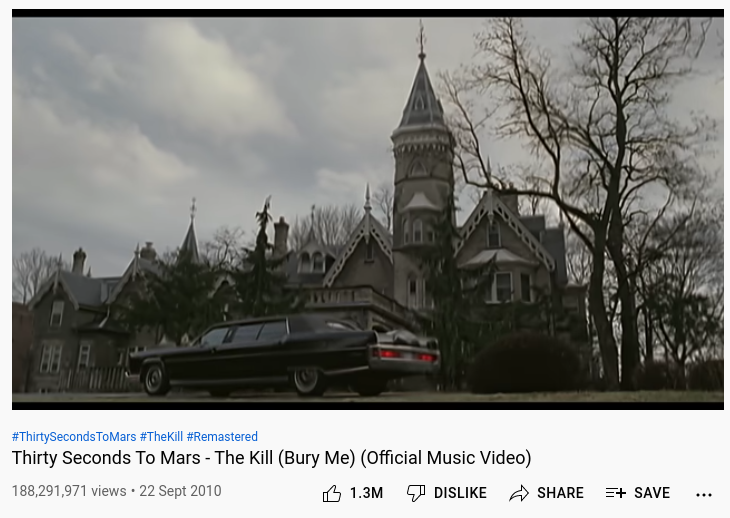
Homage and Pastiche in music videos are both respectful, and there is not really a big difference between the two and how they use intertextuality.
Reflection:
Intertextuality is usually associated with film, but can also be used in music videos with a profitable result. It is a great way to target diverse audiences at the same time, or make the target audience feel special and connected to the artists' work.
I am not sure about how or whether to use intertextuality in my music video; it would be ideal but I am not sure how well it will fit with the concept of my music video, and I do not want it to feel forced.


Comments